Three Processes. One Responsibility. A Stronger Independent Bank.
Community banks don’t lose their independence overnight.
They lose it gradually through unclear expectations, opaque leadership decisions, and boards that don’t have a consistent process to see, shape, and steward leadership over time.
At Neck Up, we believe boards don’t need more reports. They need better line of sight.
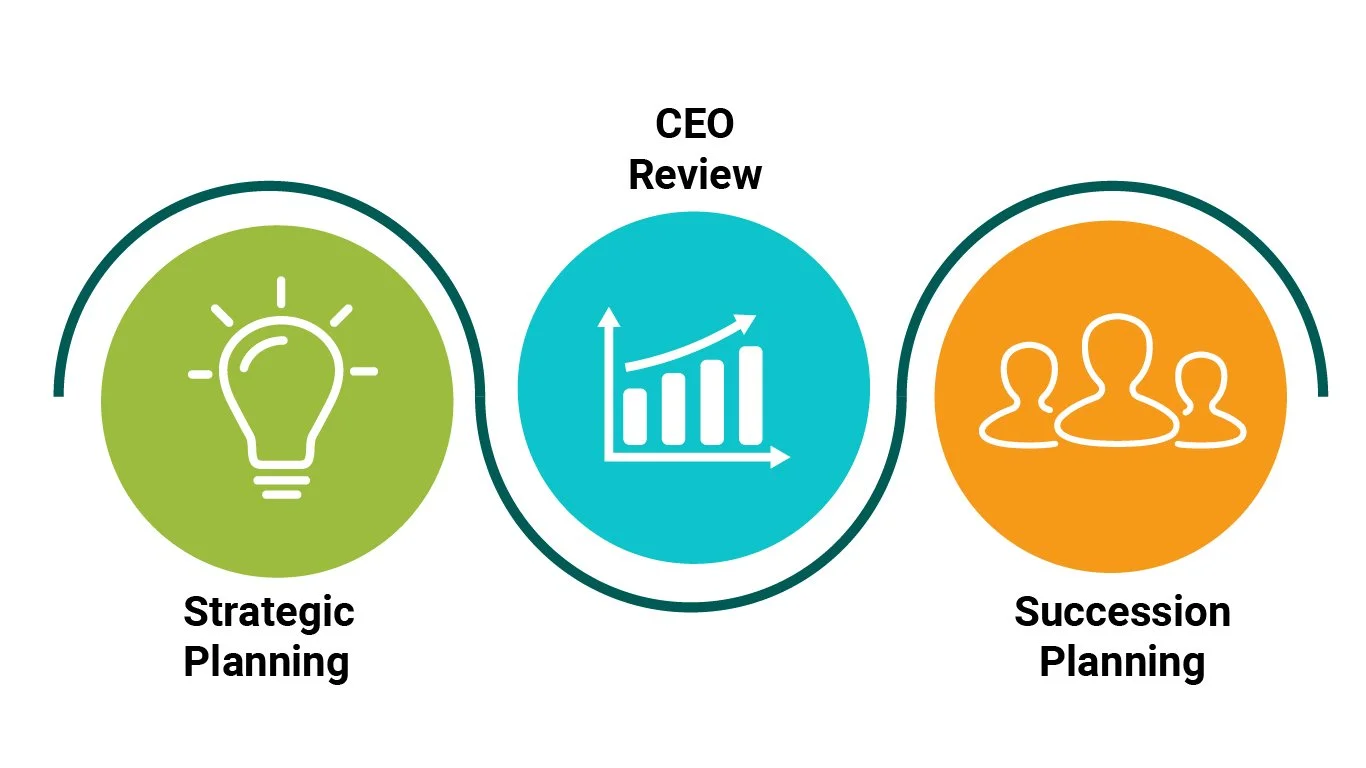
That belief sits at the center of three connected processes we’ve recently formalized:
Strategic Planning
CEO Review
Succession Planning
Individually, each process matters.
Together, they form a transparent, repeatable system that helps boards protect independence, strengthen leadership, and guide the bank forward with intention rather than reaction.
Strategic Planning: Setting Direction Before Measuring Performance
Strategic planning is where the board and leadership align on where the bank is going and why.
Too often, strategy is reduced to a budget exercise or a list of initiatives. Neck Up’s approach starts earlier and higher by clarifying the bank’s purpose, risk posture, growth priorities, and community role before debating tactics.
When strategy is clear:
Performance can be evaluated against intent, not just outcomes
Leadership decisions have a shared context
Tradeoffs become easier and more defensible
Strategic planning is the foundation. Without it, every other evaluation is disconnected.
CEO Review: Turning Strategy Into Leadership Accountability
A strong CEO review is not a personality critique or a backward-looking scorecard. It’s a structured conversation about how leadership shows up at scale.
Our CEO review process focuses on three questions boards are uniquely positioned to ask:
How does the CEO think through complexity and risk?
How do they connect, building trust with employees, regulators, and the community?
How do they act, modeling values, developing leaders, and shaping culture?
This review intentionally blends qualitative insight with objective measures, so boards aren’t guessing or relying on gut feel alone. Most importantly, it creates a shared language between the board and CEO, reducing surprises and increasing trust on both sides.
Succession Planning: Building the Bench Before You Need It
Succession planning fails when it’s treated as an emergency document instead of an ongoing discipline.
Neck Up reframes succession as a leadership readiness process, not a name-on-a-list exercise. Boards gain visibility into:
Which roles truly matter to safety, soundness, and continuity
Who is developing enterprise-level judgment, not just technical expertise
Where gaps exist early enough to do something about them
By grounding succession in observable leadership behaviors and values alignment, boards can develop talent intentionally rather than scrambling reactively.
This is how banks avoid forced sales, rushed hires, and cultural drift.
Why the Sequence Matters
These three processes are not standalone initiatives. They are sequential by design:
Strategy sets direction.
CEO review ensures leadership aligns to that direction.
Succession planning protects the direction beyond any one leader.
When boards work them together, something powerful happens:
Expectations become explicit
Feedback becomes constructive instead of personal
Leadership development becomes visible and measurable
Independence becomes a choice, not a hope
Empowering Boards Through Process, Not Control
This isn’t about boards doing management’s job. It’s about boards fulfilling their role clearly, consistently, and with confidence.
Transparent, process-driven governance doesn’t weaken relationships. It strengthens them. CEOs know what’s expected. Future leaders know what “ready” actually means. And communities benefit from banks that lead with values, discipline, and foresight.
Independence is preserved not by chance, but by stewardship.
That’s the work.
And that’s what these three processes are built to support.