
Strategic Planning Process for Community Banks
A structured approach that helps community banks turn diverse voices, clear insight, and disciplined execution into a strategy that works — not just looks good on paper.
Your strategic plan should do more than define goals. It should unify leadership, guide decisions, and establish measurable momentum tied to real outcomes. With our framework, you get a strategic plan built for how banks actually operate — aligning board vision, leadership accountability, and enterprise focus into a shared roadmap for growth, resilience, and community impact.
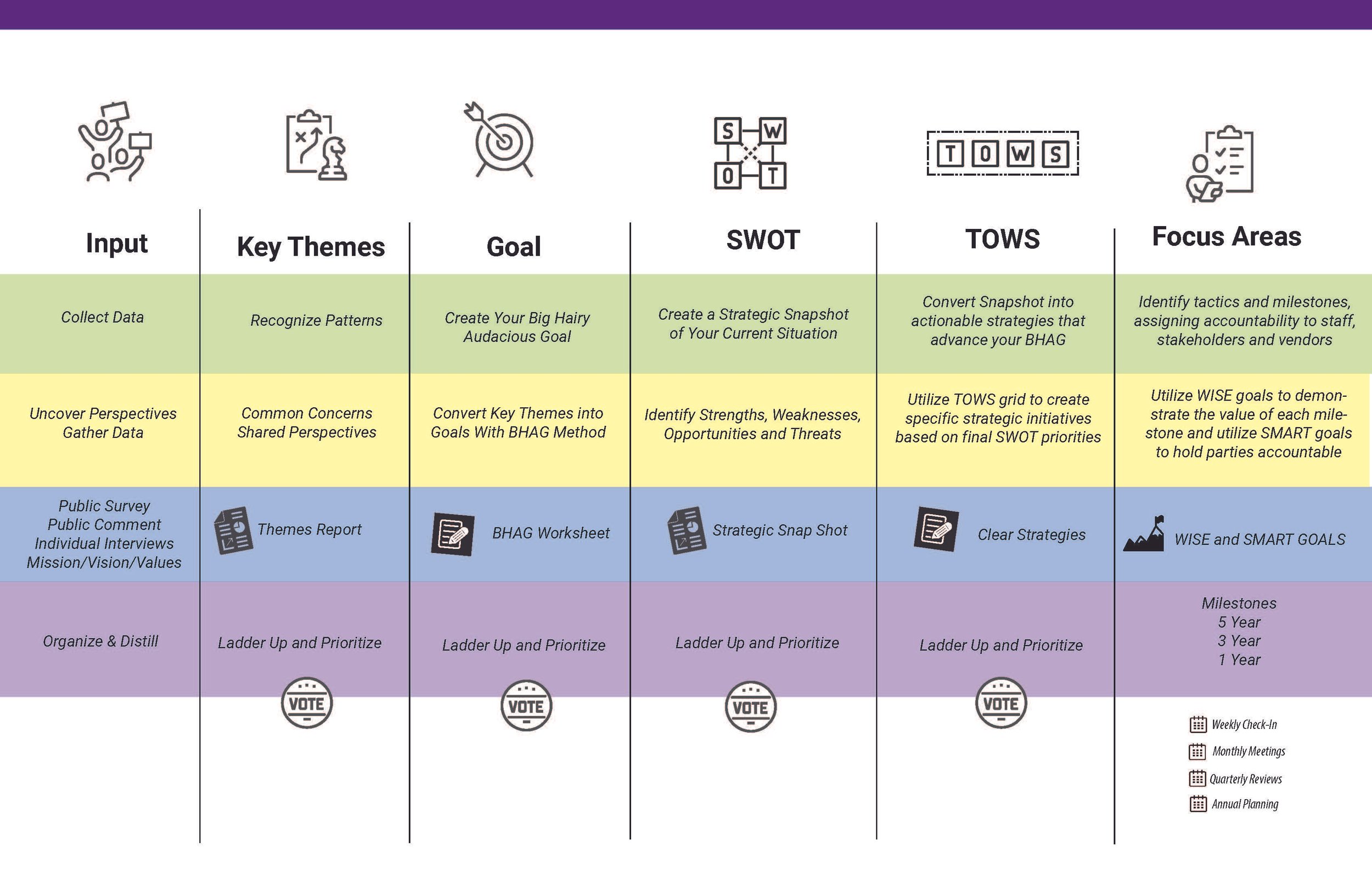
Step 1: Gather Insight
Listen before deciding.
We begin with structured input from across the bank and community — including stakeholders, staff, customers, and leadership. This hearing process collects real-world context and surface patterns rather than assumptions.
Why it matters:
Strategy rooted in meaningful input builds alignment and reduces blind spots early.
Step 2: Surface Key Themes
Turn raw input into strategic signals.
We analyze collected voices to identify recurring priorities, tensions, opportunities, and concerns. These themes become the foundation of the strategy conversation.
Why it matters:
Recognizing patterns early focuses leadership on the most important opportunities and constraints.
Step 3: Define a Direction
Establish long-term clarity.
Using insights and themes, we help you articulate a clear strategic direction — one that balances ambition with stewardship. This includes a long-term vision that serves as your compass.
Why it matters:
A well-defined direction aligns the board and leadership around a shared destination.
Step 4: Assess Current Position
Create a strategic “snapshot.”
We build a concise SWOT analysis that reflects your bank’s current strengths, weaknesses, opportunities, and threats — grounded in the earlier input and themes.
Why it matters:
An honest assessment reveals where the bank excels and where the real risks lie, setting up smarter strategy decisions.
Step 5: Translate Insight into Strategy
Identify focused strategic initiatives.
Through a structured TOWS exercise, we convert your SWOT into a focused list of strategic initiatives — actions chosen to advance your long-term direction and leverage your bank’s position.
Why it matters:
This step turns analysis into choice: what you will do next and why.
Conversation 6: Structured Input
Connect strategy to accountability.
Each strategic initiative is translated into measurable milestones with clear ownership. We blend meaningful purpose (why it matters) with SMART accountability (how success is measured).
Why it matters:
Every priority has a timeline, a measure of success, and someone responsible for driving results.
Step 7: Align Planning with Rhythm
Connect strategy to accountability.
Each strategic initiative is translated into measurable milestones with clear ownership. We blend meaningful purpose (why it matters) with SMART accountability (how success is measured).
Why it matters:
Every priority has a timeline, a measure of success, and someone responsible for driving results.
Book a Consultation

Succession Planning Process for Bank Board of Directors.
Retirement heat map
Critical Position Definitions
Critical Position Discussion Guide
Critical Position Road Map Review
Bank Succession Planning
Creates a process and structure for board of directors to have both global discussions on departmental succession as well as individual high potential candidates and their viability for short term and long term leadership roles.
NeckUp Succession Readiness Scorecard
NeckUp Personal Values Inventory
Bank Succession Preparation
Delivers a measurable process for board of directors to create growth paths of high potential individuals capable of leading critical positions.
Direct Report IDI Guide
CEO Personal Value Review
CEO Company Vision Review
CEO Overall Performance Review
CEO Evaluation Process
Provides an annual roadmap for Boards to gather meaningful input, measure technical performance and align the vision of the institutions future in a reliable, transparent and repeatable system.