Strategy Is Not a Document. It’s a Shared Point of View.
Most community banks don’t struggle because they lack a strategic plan. They struggle because the plan exists but it isn’t truly shared.
Too often, strategic planning becomes an annual exercise focused on budgets, initiatives, and timelines. Important work, yes—but incomplete. Without a clear, board-aligned point of view on why the bank exists, how it chooses to compete, and what tradeoffs it will not make, strategy becomes fragile under pressure.
At Neck Up, we believe strategic planning should answer a higher-order question first: What kind of bank are we deliberately choosing to be?
What Strong Strategic Planning Actually Does
When done well, strategic planning:
Clarifies the bank’s long-term direction beyond the next budget cycle
Aligns the board and CEO on risk appetite, growth priorities, and community role
Creates a shared language for decision-making when conditions change
Establishes the context against which leadership performance can fairly be evaluate
This kind of clarity doesn’t limit management; it empowers it. And the process is straight forward.
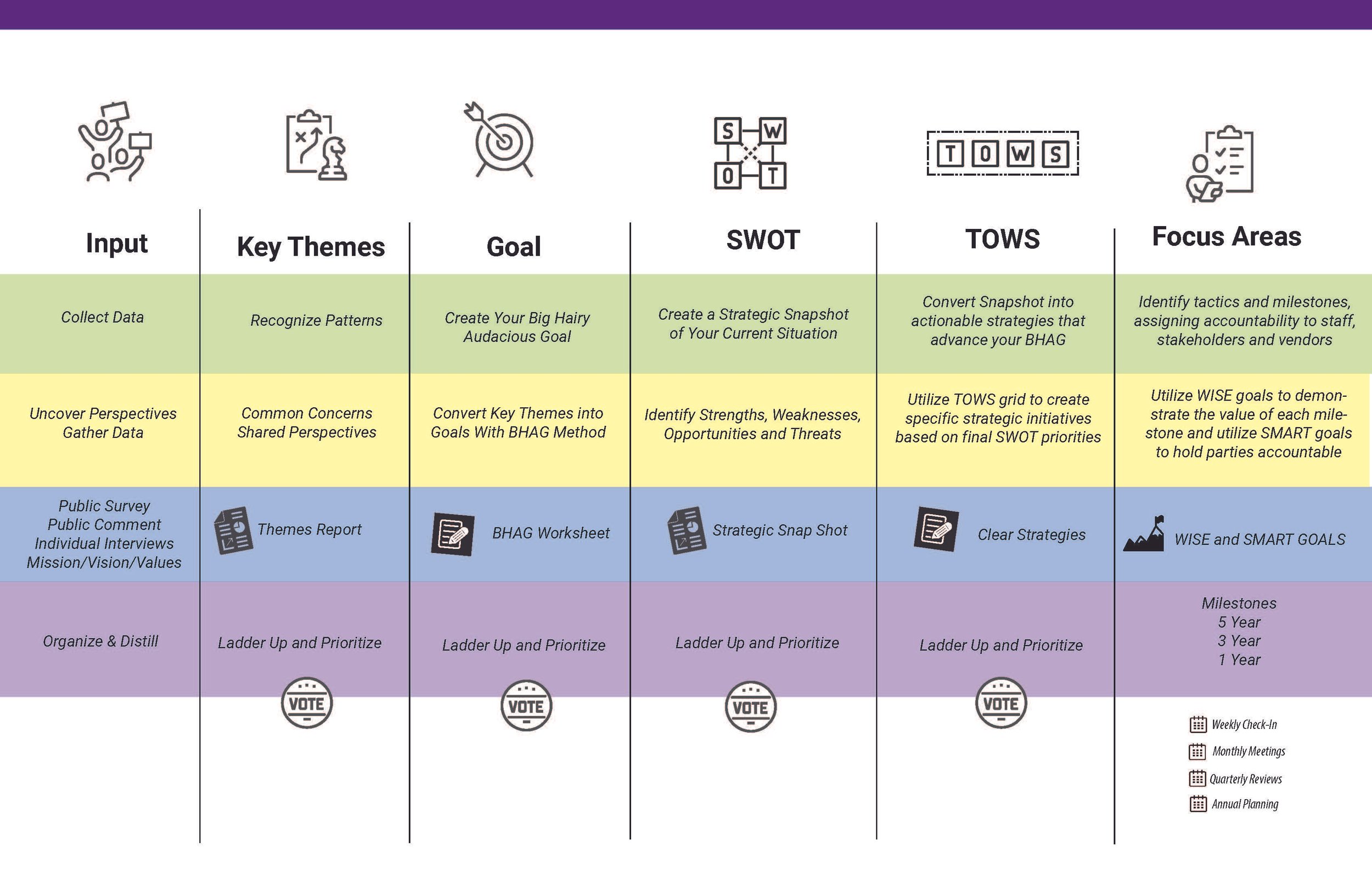
Why Boards Matter Here
Boards are uniquely positioned to steward strategy because they bring continuity, perspective, and fiduciary responsibility. But that role only works when strategy is explicit rather than assumed.
A clear strategy:
Prevents hindsight bias in CEO evaluation
Reduces confusion during leadership transitions
Anchors succession decisions in values and intent, not just resumes
Strategic planning isn’t about predicting the future.
It’s about agreeing on the principles that will guide decisions when the future surprises you.
And that makes everything that follows, including CEO review and succession planning, stronger by design.